Why Regular Dryer Vent Cleaning is Crucial for Philadelphia Home Safety
As the vibrant seasons cycle through Philadelphia, from the damp chills of winter to the humid stickiness of summer, one household chore becomes increasingly vital: laundry. And with increased laundry comes increased dryer usage. But have you ever paused to consider the unseen network keeping your dryer running efficiently and safely? We’re talking about your dryer vent. At Duct Duct Ccleaning LLC, we believe that understanding the crucial differences between a well-maintained dryer vent and a neglected one isn’t just about appliance longevity – it’s about core home safety in the City of Brotherly Love.
Learn more about our “Water Damage Duct Cleaning”, services in your area.
Learn more about our “Duct Sealing for Tree Services”, services in your area.
Learn more about our “Duct Sealing for Landscaping Companies”, services in your area.
The Critical Comparison: Clean Vent vs. Clogged Threat
Imagine two scenarios in a typical South Philadelphia rowhouse or a cozy home in Manayunk. In one, the dryer vent is a clear, unobstructed pathway, efficiently expelling hot, moist air and lint outdoors. In the other, years of accumulated lint form a dense, highly flammable blanket within the ductwork. This isn’t just a hypothetical difference; it’s a stark comparison between peace of mind and preventable peril.
Immediate Danger: Fire Risk Comparison
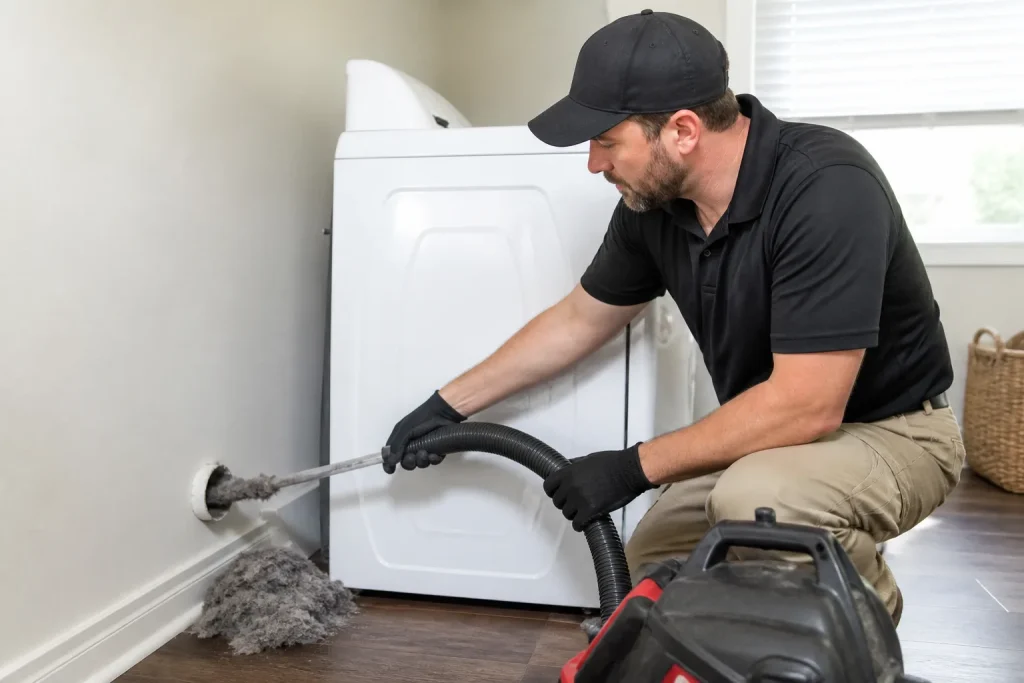
A Clean Dryer Vent: Your Fire Prevention Ally. When your dryer vent is regularly cleaned by professionals like Duct Duct Ccleaning LLC, lint and debris are removed, allowing hot air to exit freely. This prevents heat buildup within the appliance and the vent itself. The result? A significantly reduced risk of fire. Your clothes dry efficiently, and the internal components of your dryer aren’t subjected to excessive temperatures.
A Clogged Dryer Vent: A Silent Incendiary. In stark contrast, a neglected dryer vent is a major fire hazard. The U.S. Fire Administration reports that clothes dryers cause approximately 2,900 home fires annually, resulting in an average of 5 deaths, 100 injuries, and $35