Navigating Chimney Venting Requirements for New Appliances in Older Pittsburgh Homes
Installing a brand-new, high-efficiency appliance into an antique Pittsburgh chimney can be more dangerous than helpful, a ticking carbon monoxide time bomb waiting to go off. This isn’t hyperbole; it’s a stark reality often overlooked by homeowners eager to upgrade. While modern appliances offer incredible efficiency and comfort, their sophisticated venting demands frequently clash with the venerable, oversized masonry flues found in older homes across neighborhoods like Shadyside, Squirrel Hill, or Mount Washington. The consequences can range from costly chimney deterioration to serious health hazards, making careful planning and expert assessment absolutely critical.
The Lawrenceville Dilemma: A Case Study in Mismatched Systems
Consider the case of a homeowner in Lawrenceville, Mr. Henderson, who decided to replace his aging, inefficient natural-draft furnace with a gleaming, high-efficiency Category IV model. Excited by the prospect of lower utility bills, he purchased the unit, only to be stopped cold by the HVAC installer. The new furnace, designed to vent cool, exhaust-laden air with a power inducer, was completely incompatible with his historic home’s massive brick chimney, built during the city’s Gilded Age.
The Problem: Mismatched Engineering and Thermal Dynamics
Mr. Henderson’s original furnace was a Category I appliance, designed to vent hot exhaust gas, creating a natural draft that propelled the byproducts safely out of his home. His chimney, with its broad 12×12-inch clay tile liner, was perfectly sized for this purpose. The new Category IV furnace, however, vents significantly cooler exhaust, often rich in water vapor. This cooler, slower-moving exhaust simply wouldn’t achieve the necessary draft in such a large flue. The installer correctly pointed out that the gases would cool too rapidly, leading to condensation, incomplete combustion, and potentially life-threatening carbon monoxide spillage back into the home.
Even if carbon monoxide wasn’t an immediate threat, the persistent condensation—a highly acidic byproduct of high-efficiency combustion—would quickly degrade the unlined or clay-lined masonry flue, dissolving mortar and bricks over time. This premature structural failure could lead to dangerous chimney collapse or allow noxious gases to leak into the living spaces, posing severe risks for years to come. This scenario is incredibly common in older cities, which is why experts like Duct Duct Ccleaning LLC in Pittsburgh are well-versed in these unique local challenges, understanding that what works for a modern suburban build is vastly different for a century-old row house.
Decoding Modern Appliance Venting Categories
Understanding the distinctions between appliance venting categories is paramount for anyone upgrading their home’s mechanical systems. These classifications dictate how an appliance expels combustion byproducts, primarily based on exhaust gas temperature and pressure.
- Category I (Natural Draft): These are older, less efficient appliances. They produce high-temperature flue gases that naturally rise, creating a draft in the chimney. They require a chimney that stays warm enough to maintain this draft and prevent condensation.
- Category II & III (Less Common): These categories are used for specific, often commercial, applications and have unique venting requirements.
- Category IV (High-Efficiency, Forced Draft): The most common type of new appliance (furnaces, water heaters). They extract nearly all heat from the combustion gases, meaning the exhaust is much cooler and often vented under positive pressure by an induced draft fan. These typically require dedicated, smaller, often plastic (PVC or CPVC), or stainless steel vents, not traditional masonry chimneys.
Critical Differences for Older Chimneys
The core issue lies in the design purpose. An older masonry chimney provides natural draft and withstands high temperatures, while Category IV appliances require a smaller, sealed vent that can handle acidic condensation and positive pressure. Attempting to use a traditional flue for a Category IV appliance leads to:
- Insufficient Draft: Cool gases won’t rise, causing dangerous backdrafting and carbon monoxide accumulation.
- Excessive Condensation: The large, cool flue surfaces act as a condenser, leading to severe acid damage to the chimney structure.
- Inadequate Sealing: Old chimneys are often leaky, allowing corrosive moisture and gases to escape into walls or attics.
This isn’t just a Pittsburgh problem; Duct Duct Ccleaning LLC in Chicago and Duct Duct Ccleaning LLC in Boston face similar dilemmas with historic housing stock and outdated venting infrastructure.
Why Pittsburgh’s Architecture Matters
Pittsburgh’s housing stock is characterized by its age and variety, from Victorian-era homes in Point Breeze to classic brick bungalows in Dormont. Many of these homes, especially those built before the 1960s, relied on large, unlined or fireclay-lined masonry chimneys for central heating and hot water. These chimneys were often built for coal furnaces, which produced incredibly hot exhaust, drying out any moisture. Modern high-efficiency systems, conversely, are engineered for sealed, appropriately sized venting systems. The city’s cold, damp winters only amplify the condensation issue, making proper flue lining and sizing not just a recommendation but a necessity. Ignoring these specifics means risking your home’s structural integrity and your family’s safety.
Professional Intervention: The Duct Duct Ccleaning LLC Advantage
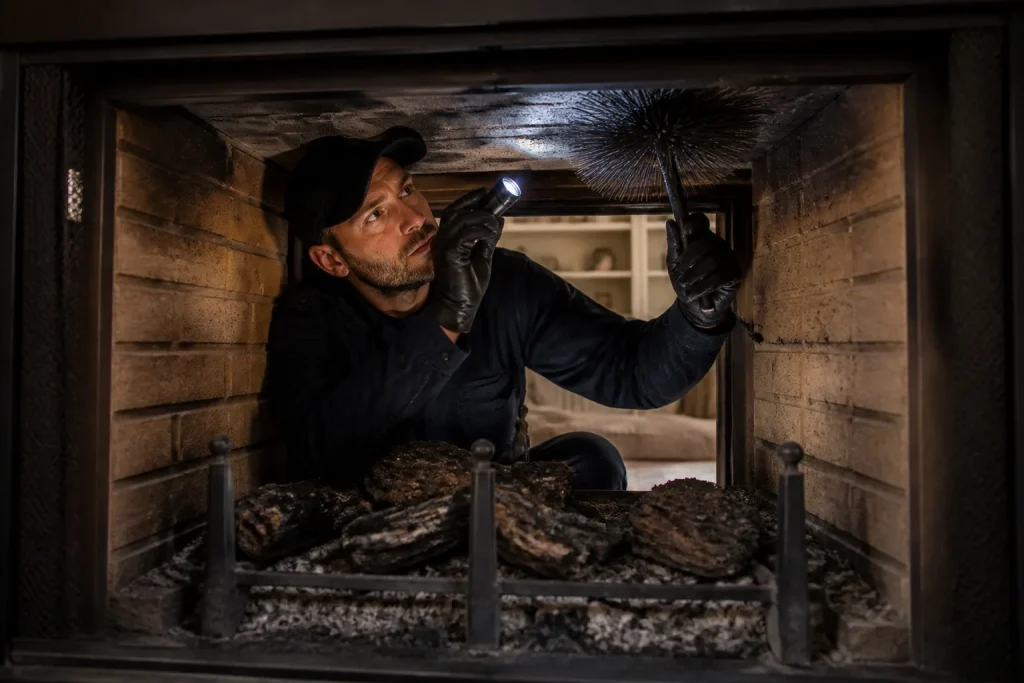
When faced with the challenge of integrating new appliances into old venting systems, professional expertise is indispensable. This is where companies like Duct Duct Ccleaning LLC, offering comprehensive single-zone HVAC cleaning and chimney services, truly shine. Our technicians are trained to assess the specific needs of your older home and its unique chimney structure. A thorough chimney inspection, often involving video cameras, can identify existing damage, blockage, or inappropriate sizing.
Ensuring your chimney vents properly is as crucial for indoor air quality as regular air duct inspection. Carbon monoxide is odorless and colorless, making proactive measures essential. For a prompt, professional assessment in Cherry Hill, NJ, don’t hesitate to call us at (609) 507-0043.
Solutions for Safe Venting
Fortunately, several solutions exist to safely connect a modern, high-efficiency appliance to an existing chimney system:
- Stainless Steel Liners: This is often the most practical and recommended solution. A appropriately sized, high-grade stainless steel liner (either rigid or flexible) is installed inside the existing masonry flue. This creates a dedicated, sealed pathway that can withstand the acidic condensation and maintain proper draft for the new appliance. The space between the liner and the original flue can also be insulated to help maintain flue gas temperatures.
- Direct Venting: In some cases, especially with furnaces or water heaters, it may be more appropriate to bypass the chimney entirely and vent directly through a side wall or roof using a concentric (pipe-within-a-pipe) or parallel plastic vent system.
- Power Venters/Induced Draft Fans: For Category I or II appliances that struggle with natural draft, a power venter can be installed at the chimney top or base to mechanically pull exhaust gases out. This is less common for new Category IV appliances which typically have their own inducer fans.
Proactive Steps for Homeowners
The key to avoiding Mr. Henderson’s dilemma is proactive planning. Before purchasing a new furnace, water heater, or boiler, engage with a qualified chimney professional. At Duct Duct Ccleaning LLC, we recommend:
- Pre-Installation Assessment: Have your chimney inspected to determine its suitability for a new appliance. Understanding its current condition and construction is step one.
- Appliance Specification Review: Share the make and model of your intended appliance with your chimney service provider. They can verify its venting requirements against your existing chimney structure.
- Integrated Planning: Work with both your HVAC installer and chimney technician. Their combined expertise ensures the new appliance is installed correctly, safely, and efficiently, providing clean air in your home and protecting against issues like those that duct sealing for allergen reduction aims to prevent.
Investing in a proper chimney evaluation and necessary modifications isn’t an extra cost; it’s a critical safety investment that safeguards your home and health for decades.
FAQ: Chimney Venting for New Appliances
What’s the main risk of venting a new furnace into an old chimney?
The primary risks are carbon monoxide poisoning due to insufficient draft and chimney deterioration from acidic condensation.
What type of liner is best for a new high-efficiency appliance?
A stainless steel liner, correctly sized for the appliance, is typically recommended. It’s resistant to corrosion and provides a sealed, efficient pathway for exhaust gases.
How can I tell if my chimney is damaged by condensation?
Look for white staining (efflorescence) on the exterior masonry, crumbling mortar joints, or a sulfuric odor. Inside, you might see staining or crumbling on the flue tiles.
Do I need a chimney professional if my HVAC installer says they can vent it?
Yes, always get an independent assessment from a chimney professional. HVAC installers are experts in appliances; chimney professionals are experts in venting structures, codes, and safety standards.
What does a chimney inspection for appliance compatibility involve?
It typically includes a visual inspection, often with a video camera, to assess the flue size, condition of liners and mortar, blockages, and overall structural integrity relative to the new appliance’s requirements.
Can I connect multiple new appliances to one chimney flue?
Generally, new high-efficiency appliances should have their own dedicated vent or liner, unless they are specifically designed to be common-vented, which is rare and requires careful sizing and engineering. Consult with a professional.