Chimney Liner Types for Historic Philadelphia Rowhomes: Balancing Safety and Preservation
Imagine this: You’ve finally bought that dream historic rowhome in Society Hill or Graduate Hospital. You love the charm, the history, the intricate brickwork. Winter arrives, you light your fireplace for the first time, and a wave of cozy nostalgia washes over you… until a faint, acrid smell drifts into the room, or you notice a bit of smoke backing up. Suddenly, that charming fireplace feels less quaint and more concerning. This isn’t just about comfort; it’s about the safety of your home and family. Many owners of Philadelphia’s beautiful, century-old properties face this exact scenario. Their historic chimneys, built for a different era, might not be equipped for modern usage without proper updates.
Learn more about our “Duct Sealing for Refineries”, services in your area.
Learn more about our “Mitsubishi Duct Cleaning”, services in your area.
Learn more about our “Duct Sealing for Regulatory Compliance”, services in your area.
At Duct Duct Ccleaning LLC, we understand the unique challenges of maintaining these architectural treasures. Balancing historical preservation with crucial safety standards, especially regarding your chimney liner, is key. So, let’s talk about chimney liners – the unsung heroes protecting your home from fire and carbon monoxide. We’ll break down your options in a straightforward, neighborly way.
Understanding Your Historic Chimney’s Needs
- The Original Flue: Many historic Philadelphia chimneys were built with clay tile liners, or in some cases, no liner at all, relying solely on brick and mortar. While robust in their time, these materials degrade. Over decades of freeze-thaw cycles and acidic combustion byproducts, mortar joints can crumble, and tiles can crack.
-
Why a Liner is Non-Negotiable:
- Fire Protection: A modern liner acts as a barrier, containing heat and flames, preventing them from igniting the combustible materials (like wooden joists) embedded within your chimney walls. The National Fire Protection Association (NFPA) recommends annual chimney inspections to ensure liner integrity.
- Carbon Monoxide Containment: A sound liner prevents dangerous carbon monoxide (CO) from seeping through cracks into your living space. CO is odorless and invisible, making a tight flue crucial for safety.
- Improved Draft & Efficiency: A properly sized and smooth liner helps the chimney draw smoke and gases effectively, preventing backdrafts and increasing the efficiency of your heating appliance.
- Corrosion Protection: Liners protect the masonry from corrosive acidic byproducts produced by burning fuels, extending the chimney’s lifespan.
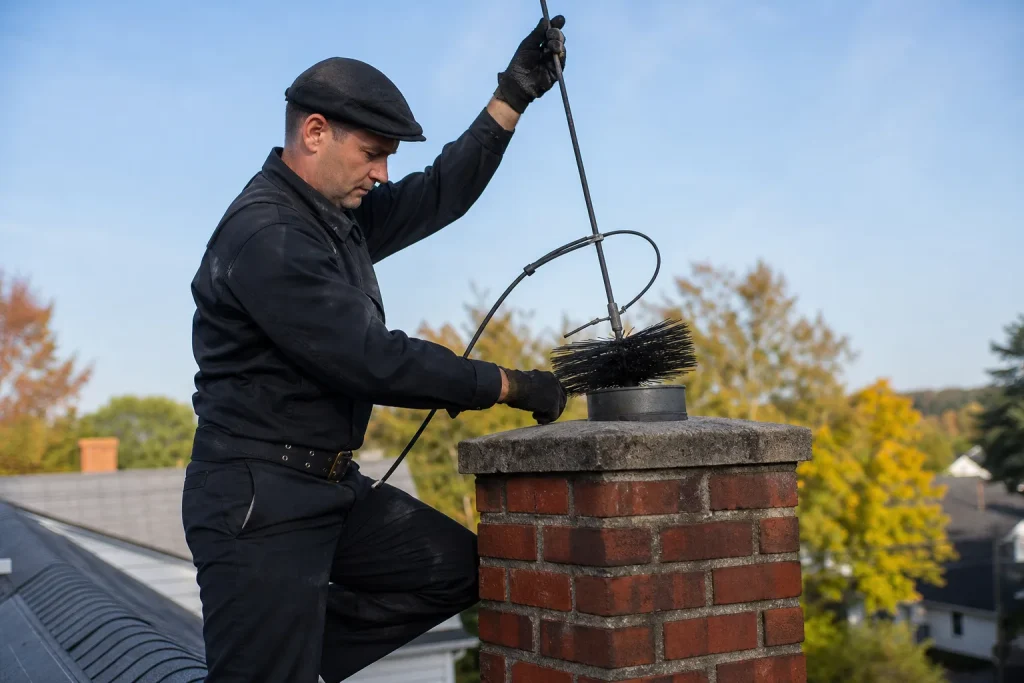
- Historic Preservation Considerations: When choosing a liner, particularly for a home in a historically designated district near Rittenhouse Square or Old City, you’ll need a solution that fits within the existing flue space without damaging the exterior structure or altering its historical appearance. This is where expert chimney services from Duct Duct Ccleaning LLC come in handy.
Common Chimney Liner Types for Philadelphia Rowhomes
Here’s a look at the most suitable options for historic chimneys, balancing durability with minimal structural impact:
-
Stainless Steel Chimney Liners
-
Pros:
- Versatile & Durable: Made from high-grade stainless steel (often 316-grade for wood, oil, coal, and gas, or 304-grade for natural gas), these are incredibly durable and resistant to corrosion.
- Flexible & Rigid Options: Available as flexible coils, perfect for navigating offsets and bends common in older chimneys, or as rigid sections for straighter flues.
- Easy Installation: Can be installed relatively quickly by trained professionals, often snaking down an existing, damaged flue.
- Cost-Effective: Generally a more affordable option than poured-in-place liners.
- Popular Choice: These are a go-to for many historic homeowners seeking a reliable and safe solution.
-
Cons:
- Insulation Needed: Often requires insulation (like a vermiculite pour or wrapped blanket) around the liner to prevent creosote buildup (in wood-burning flues) and maintain flue gas temperatures for better draft.
- Aesthetics (Interior): While not visible from the exterior, the interior cap and connection might be less “historic” looking than other options, though this is a minor point for most.
-
Pros:
-
Poured-In-Place Chimney Liners (Cementitious)
-
Pros:
- Creates a Seamless Flue: A liquid refractory cement mixture is pumped into the flue, forming a custom, seamless, and incredibly strong liner within the existing chimney structure.
- Structural Reinforcement: This method not only lines but also structurally reinforces the existing masonry, which can be a huge benefit for older, deteriorating chimneys.
- Excellent Insulator: Provides fantastic insulation properties, crucial for high-efficiency appliances and wood stoves.
- Preserves Original Look: Since it uses the existing chimney structure as a mold, there’s no change to the exterior appearance of your historic home.
-
Cons:
- Higher Cost: Generally more expensive due to specialized materials and labor-intensive installation.
- Longer Installation Time: Requires more time for installation and curing.
- Less Flexible: Not ideal for very intricate, winding flues that have extreme offsets.
-
Pros:
-
Clay Tile Liners (Replacement)
-
Pros:
- Authenticity: If your original clay tiles are simply cracked or missing, replacing them with new clay tiles maintains the most historically authentic material.
- Durable: When installed correctly, clay tiles are very robust and long-lasting.
-
Cons:
- Challenging Installation: Often requires significant demolition and reconstruction of the chimney to replace individual tiles, which can be costly and labor-intensive.
- Thermal Shock: Clay tiles are susceptible to cracking from thermal shock, especially with intense fires or if the chimney isn’t properly insulated.
- Not for All Appliances: May not be suitable for all modern, high-efficiency appliances that produce cooler flue gases, leading to condensation issues.
-
Pros: