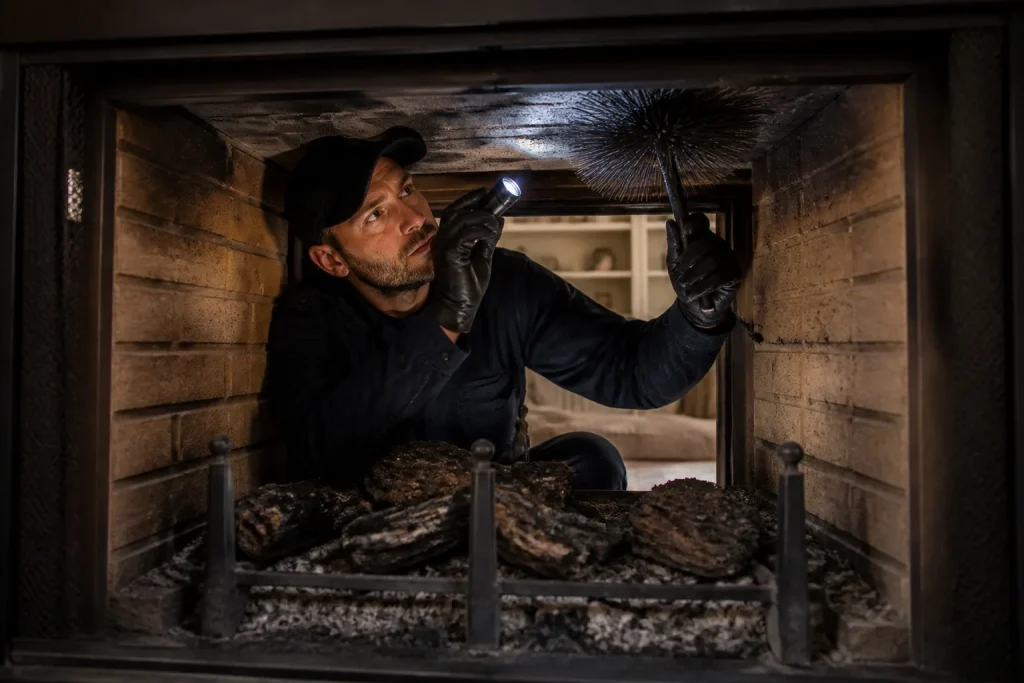
Understanding Your Fireplace Damper: Essential Maintenance for Cleveland Homeowners
You know that moment, just before the mercury drops like a stone in the heart of a Cleveland winter, and you’re dreaming of that first cozy fire? You gather the logs, maybe a good book, and light it up. Ah, pure bliss! Then, the house starts filling with smoke, or worse, that delightful warmth rushes straight out the top, leaving you colder than Lake Erie in January. Sound familiar?
A common, and often frustrating, mistake homeowners make is assuming their fireplace is a magical, self-sufficient heat generator. The truth is, there’s a unsung hero (or villain, if neglected) lurking just above your firebox: the fireplace damper. Often overlooked until something goes wrong, understanding this crucial component is essential for safe, efficient, and enjoyable fires. While our expert team at Duct Duct Ccleaning LLC primarily serves the good folks of Cherry Hill, NJ, the principles of a safe and efficient chimney system are universal, and these insights are invaluable for homeowners, whether you’re braving the lake-effect snows of Cleveland or the milder winters of the East Coast.
What Exactly is a Fireplace Damper?
Think of your fireplace damper as the bouncer for your chimney. It’s a movable plate, usually made of metal, that’s installed either at the top of your chimney (a top-sealing damper) or just above the firebox (a throat damper). Its main job? To open when you want a fire, allowing smoke and combustion byproducts to escape, and to close tightly when the fireplace isn’t in use, preventing heat loss and keeping out unwanted guests (like chilly drafts, pesky critters, or even rain).
Without a properly functioning damper, your fireplace becomes an energy black hole. On average, a fireplace without a closed damper can allow up to 8% of your home’s heat to escape through the chimney, which is like leaving a window open during a snowstorm – an expensive oversight in a city like Cleveland where heating bills can be substantial!
The Humorous Side of a Damper Disaster
Let’s be real, a stuck or forgotten damper can lead to some truly memorable (and not-so-great) moments. We’ve heard tales from homeowners in areas like Shaker Heights and Ohio City about smoke detectors screaming during what was supposed to be a romantic evening, or the distinct aroma of bonfire clinging to every curtain and piece of upholstery. One homeowner even recounted how, after a particularly blustery Cleveland day, they discovered an entire bird’s nest (thankfully empty!) had been built directly on top of their open, non-functional throat damper, turning their chimney into a luxurious avian Airbnb. A quick inspection and cleaning, something we excel at, would have prevented that feathery fiasco.
Sometimes, homeowners live in a kind of ‘mixed reality’ – they *think* their fireplace is sealed up tight, but the reality of a broken damper tells a different story. It’s a bit like imagining a perfect smart home where everything functions seamlessly, only to discover a critical flaw in a fundamental system. Just as you might delve into advanced topics like “Duct Sealing for Mixed Reality (MR)”, to optimize future-proof systems, understanding the simple mechanics of your damper today is vital for real-world comfort and efficiency.
Signs Your Damper Needs Attention
Your damper isn’t usually one to send out smoke signals (unless it’s stuck open and you’re literally getting smoke signals indoors!). Instead, look for these tell-tale signs:
- Smoke in the Room: If your well-vented fire is sending more smoke into your living room than up the chimney, your damper might be closed, stuck, or obstructed.
- Drafts & Cold Air: Feeling a noticeable chill near your fireplace even when it’s not in use? A leaky or open damper is likely letting that frosty Cleveland air right into your home.
- Unusual Odors: Lingering smells of smoke, creosote, or even mustiness can indicate a damper that isn’t closing completely, allowing outdoor air or chimney odors inside.
- Visible Damage: Rust, bends, or missing pieces on a throat damper are clear indicators it’s time for an inspection. For top-sealing dampers, you might need a professional chimney sweep to assess their condition, especially if you also notice other issues like leaves or debris in the flue.
- Sticking Mechanism: If the chain or lever for your damper is stiff, loose, or just won’t budge, it’s a sign of trouble.
Maintaining your fireplace damper isn’t just about safety; it’s about energy efficiency. An open or leaky damper is like leaving a window cracked all winter, letting your heat escape faster than a Browns’ playoff hope. This energy loss is a silent wallet drainer, much like poorly sealed air ducts. In fact, many principles of home efficiency, even those discussed in fields like “Duct Sealing for Building Operations”, highlight the importance of sealing all penetrations to maintain a comfortable indoor climate. Regularly checking your damper and getting annual chimney cleanings helps keep these issues in check.
🌀 Need Professional Cleaning?
Air duct cleaning, chimney sweeping, and dryer vent cleaning. Same-day service available.
(856) 588-0352 📞 Call Now — Free EstimateYou Might Also Like
Air Duct Cleaning, Chimney Services & Dryer Vent Cleaning Services in New York City: Expert Guide 352
Air Duct Cleaning, Chimney Services & Dryer Vent Cleaning Services in New York City: Expert Guide 352 Living…
Read More →
Beyond Standard Checks: Why Advanced Dryer Vent Inspections Are Crucial for Coastal Homes in Boston, MA
Beyond Standard Checks: Why Advanced Dryer Vent Inspections Are Crucial for Coastal Homes in Boston, MA Picture Sarah,…
Read More →
The Surprising Connection: How Clean Air Ducts Impact Your Home’s Indoor Humidity Levels in Cherry Hill, NJ
The Surprising Connection: How Clean Air Ducts Impact Your Home’s Indoor Humidity Levels in Cherry Hill, NJ The…
Read More →