Gas vs. Electric Dryers: Different Venting Needs for Cherry Hill Homes
Most homeowners in Cherry Hill are making a critical mistake when it comes to their laundry rooms. They believe a dryer vent is a dryer vent, regardless of whether their appliance runs on gas or electricity. This is a dangerous oversight, potentially costing them money, risking their homes, and impacting their family’s safety.
At Duct Duct Ccleaning LLC, we see the consequences of this misconception daily across communities from Barclay Farm to Kingston. Understanding the distinct venting needs of gas versus electric dryers isn’t just about efficiency; it’s about fire prevention and mitigating carbon monoxide hazards. Let’s set the record straight.
Understanding the Fundamental Difference: Gas vs. Electric
While both gas and electric dryers perform the same function – drying clothes by removing moisture – the byproducts they generate are fundamentally different, necessitating unique venting considerations. An electric dryer heats air using an electric element, expelling primarily hot, moist air laden with lint. A gas dryer, conversely, burns natural gas or propane, producing not only hot, moist air and lint but also combustion byproducts, including carbon monoxide.
Electric Dryer Venting: Focus on Airflow and Lint
For electric dryers, the primary venting concern is efficient expulsion of humid air and lint. A clogged vent in an electric dryer will lead to extended drying times, increased energy consumption (some sources suggest up to a 30% increase in energy use for a partially clogged vent), and a significant fire hazard from accumulated lint. Lint is highly flammable; the Consumer Product Safety Commission (CPSC) reports thousands of dryer fires annually, with lint identified as the leading cause.
Your vent system, typically 4-inch rigid or flexible aluminum ducting, must be as short and straight as possible. Every bend and foot of length adds resistance, reducing airflow. In Cherry Hill’s humid summers, this reduced airflow means moisture struggles to escape, making your dryer work harder and increasing the risk of mold and mildew in the vent line itself. Regular inspection and cleaning are paramount, and not just at home in Cherry Hill but for similar residential challenges faced by Duct Duct Ccleaning LLC in Dallas and other cities.
Gas Dryer Venting: Dual Threats of Lint and Carbon Monoxide
Gas dryers carry all the same lint and moisture concerns as electric dryers, but with the added, deadly risk of carbon monoxide (CO) buildup if the vent system is compromised. Carbon monoxide is an odorless, colorless gas that can be fatal. If a gas dryer vent is obstructed or leaks, CO can backdraft into your home. This is why strict adherence to installation guidelines and vigilant maintenance are non-negotiable for gas dryers.
The venting materials for gas dryers often require greater heat resistance and stricter sealing to prevent exhaust leaks. Unlike an electric dryer, a gas dryer vent must terminate outdoors safely, away from windows and air intakes, to prevent CO from re-entering the building. This is a critical distinction that many homeowners overlook, sometimes with tragic consequences. Our team at Duct Duct Ccleaning LLC specializes in ensuring these systems are not only clean but also safely sealed, just as rigorously as when we perform manufacturing facility HVAC cleaning, where safety standards are paramount.
Critical Venting Requirements & How-To Guide
Step 1: Understand Approved Venting Materials
For both dryer types, plastic or vinyl flexible ducts are explicitly forbidden by appliance manufacturers and fire safety codes due to their flammability and tendency to sag, trapping lint. Always use rigid metal (galvanized steel or aluminum) or UL-listed flexible metal ducting. Rigid metal offers the best airflow and is the easiest to clean and maintain over time. While the principles of clean airflow apply universally, our teams understand the specific requirements for different systems, from Cherry Hill homes to complex air distribution needs like duct sealing for museum HVAC systems.
Step 2: Optimize Vent Path Length and Bends
Keep the vent run as short and straight as possible. The maximum allowable length varies by dryer model, but a common guideline is 25 feet, deducting 5 feet for every 90-degree bend and 2.5 feet for every 45-degree bend. Longer or more complex runs drastically reduce airflow, increasing drying times, energy consumption, and fire risk. We frequently encounter overly long or kinked vents in older Cherry Hill homes, a common issue also addressed by Duct Duct Ccleaning LLC in New York and other areas.
Step 3: Ensure Proper Exterior Termination
The dryer vent cap on the exterior of your Cherry Hill home should have a flap that opens when the dryer is operating and closes when it’s off, preventing pests and drafts. Critically, this cap should never have a screen, as screens quickly trap lint and severely restrict airflow. For gas dryers, the termination point must be carefully selected to avoid CO re-entry.
Step 4: Schedule Professional Dryer Vent Cleaning
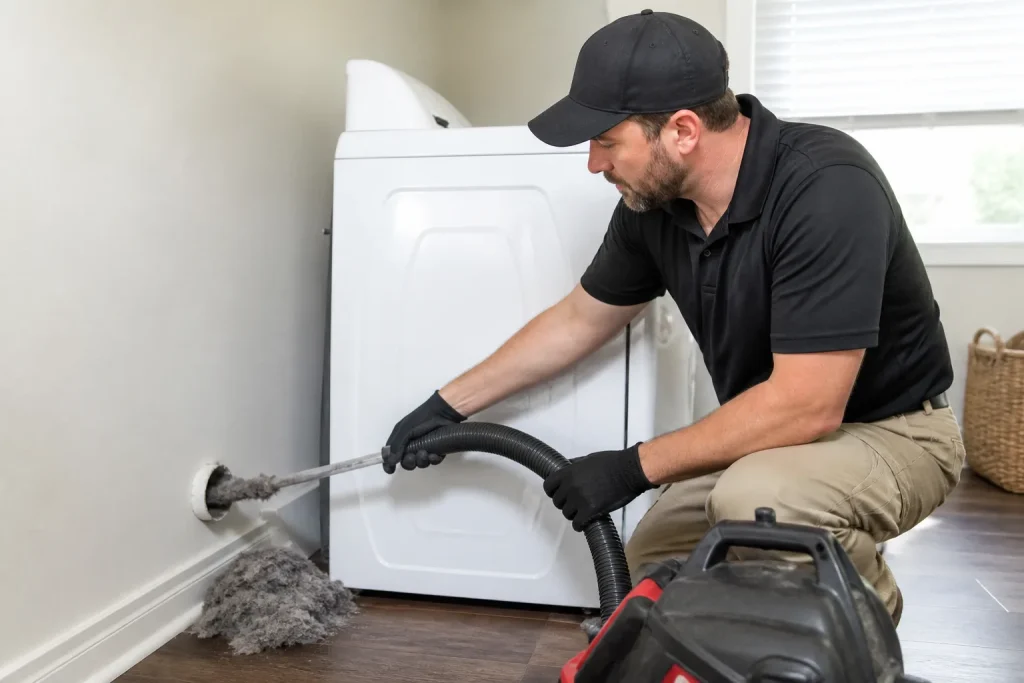
Regardless of dryer type, professional dryer vent cleaning by experts like Duct Duct Ccleaning LLC is not optional; it’s essential, typically every 1-2 years. Visible lint around the dryer, clothes taking longer to dry, or a burning smell are clear indicators you’re overdue. For safety and efficiency, call us at (609) 507-0043. We handle everything from routine cleaning to addressing specific challenges like duct sealing for electronics removal and ensuring overall air quality within your system.
FAQ: Dryer Venting in Cherry Hill Homes
Here are common questions Cherry Hill residents ask about dryer vent maintenance:
Q1: How often should my dryer vent be professionally cleaned?
A: For most households in Cherry Hill, an annual professional cleaning is recommended. For larger families or heavy dryer usage, cleaning every six to nine months may be necessary.
Q2: What are the main signs of a clogged dryer vent?
A: Common signs include clothes taking longer to dry, clothes feeling hotter than usual at the end of a cycle, a burning smell, excessive lint on clothes, and the outdoor vent flap not opening.
Q3: Can I clean my dryer vent myself?
A: While you can clean the lint trap and the first few feet of the vent duct accessible from the dryer, professional cleaning is crucial for clearing the entire vent run, including difficult-to-reach sections and rooftop terminations. Our specialized tools and expertise ensure a thorough job, helping prevent hot spots that even necessitate solutions like duct sealing for hot spot elimination in commercial contexts.
Q4: Does the type of siding on my Cherry Hill home affect my dryer vent?
A: Not directly, but certain siding types might influence the choice of exterior vent cap for aesthetics or ease of installation. The critical factor remains the material and condition of the vent duct itself, from the dryer to the exterior.
Q5: Is it possible for animals to get into my dryer vent?
A: Yes, birds, rodents, and other small animals often seek shelter in dryer vents, especially if the exterior cap is damaged or missing. This creates dangerous blockages and can introduce debris into your system. This is a common issue our technicians address in Cherry Hill and is similar to challenges faced by Duct Duct Ccleaning LLC in Chicago.
Q6: Does a professional dryer vent cleaning improve my dryer’s efficiency?
A: Absolutely. A clean vent allows for optimal airflow, meaning your dryer doesn’t have to work as hard or as long to dry clothes. This translates directly to lower energy bills and extended appliance lifespan.
Don’t Take Chances with Your Home’s Safety and Efficiency
The difference between gas and electric dryer venting isn’t trivial; it’s a matter of safety and efficiency. Ignoring these distinctions can lead to fire hazards, carbon monoxide exposure, and unnecessary energy waste. Protect your investment, your family, and your peace of mind.
If you’re in Cherry Hill, NJ, and concerned about your dryer vent system, whether gas or electric, contact the experts at Duct Duct Ccleaning LLC. We provide thorough dryer vent cleaning, inspections, and ensure your system meets all safety standards. Don’t wait until it’s too late. Call us today at (609) 507-0043 for professional service you can trust.